
ASIC releases implementation roadmap for digital assets regime
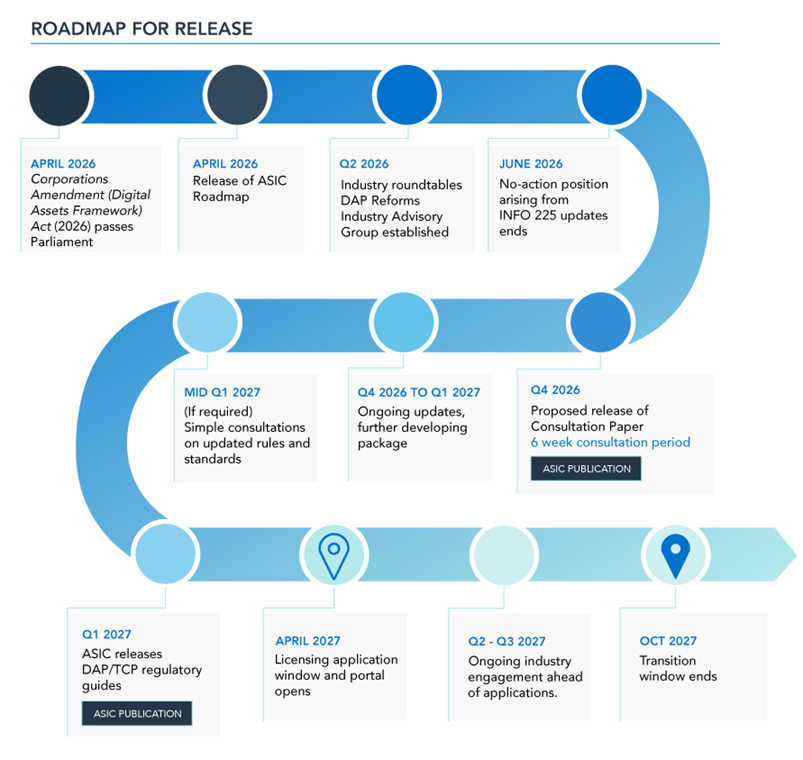
ASIC has released its implementation roadmap for the digital assets framework (see Figure 1), outlining how the new licensing regime for digital asset platforms and custody providers will be introduced ahead of its commencement in April 2027. The roadmap sets out the implementation period during which ASIC will consult on and finalise regulatory guidance and legislative instruments governing the regime.
Figure 1: ASIC implementation roadmap
These instruments are expected to address asset holding and custody requirements, transaction execution and settlement processes, and financial requirements aligned with existing AFS licensing standards.
ASIC will also release a new regulatory guide for digital asset platforms and tokenised custody platforms, covering the operation of the regime, when licensing obligations are triggered, and how the framework interacts with existing financial services, market and clearing and settlement regimes.
The roadmap provides for a staged implementation, including:
- consultation with industry and establishment of an advisory group, and expiry of the current INFO 225 class no-action position;
- release of regulatory guidance and operational standards;
- opening of licence applications, with operators able to rely on regulatory relief while applications are assessed; and
- full implementation, including ASIC supervision and enforcement.
The expiry of the INFO 225 no-action position will require entities to comply with existing licensing requirements during the transition period.
ASIC has also indicated it will consult on matters including standard licence conditions, responsible manager requirements and potential streamlining of licence variation processes for certain entities.
For further information or assistance, please contact Chris Mee at cmee@cnmlegal.com.au or Alanah McAliece at amcaliece@cnmlegal.com.au, or call 07 3211 4010.
This article is produced as general information in summary for clients and should not be relied upon as a substitute for detailed legal advice or as a basis for formulating business or other decisions. CNM Legal asserts copyright over the contents of this article.